

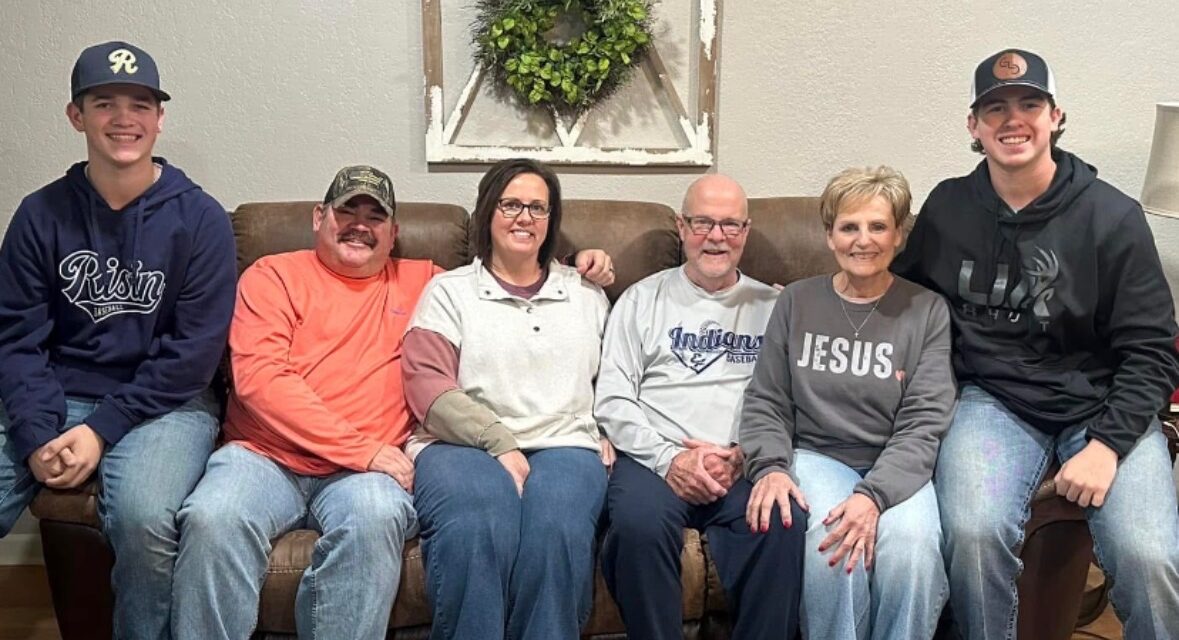
April marks Donate Life Month, a time dedicated to raising awareness about organ donation, one Oklahoma man is living proof of its impact.
Pete Petree remembers two dates: June 1, 1990, when he began full-time ministry, and June 1, 2024, when he received a new heart — a gift that saved his life.
The years between were shaped by Wednesday night Bible studies, late conversations with teenagers and college students, and a ministry built on relationships.
“I just built relationships with the kids, very personal like that,” Petree said. “I know a lot of youth ministers… they’re up here. But I wanted to be in the middle of them.”
For Petree, ministry was never about a platform. It was sidelines at football practice, post-game hugs and, years later, officiating weddings for students he once drove home from youth group. It was saying yes to a calling, without always knowing what that would require.
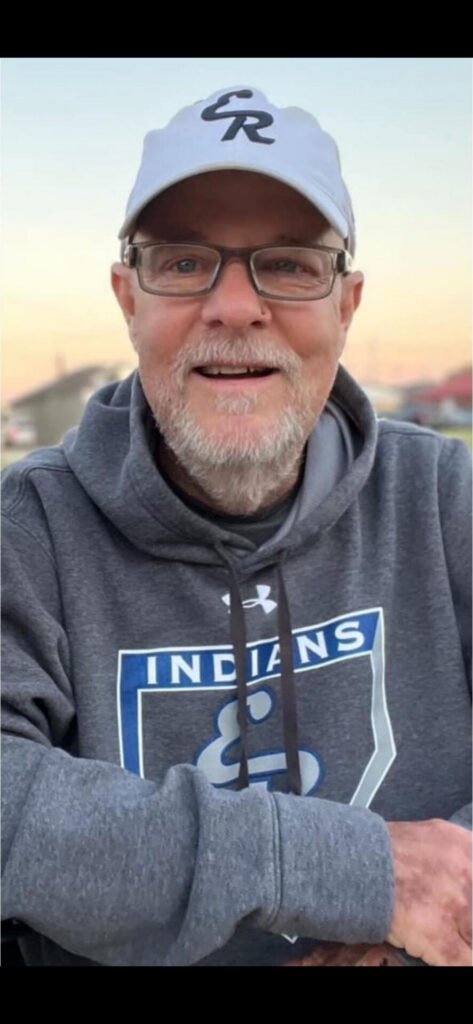 He began that journey at El Reno, First, where he spent 15 years in youth ministry before making the transition to work with college students in Weatherford. His approach was simple: focus less on theory and more on application.
“A lot of students didn’t want deep theology,” he said. “They wanted to know, how can I live this out tomorrow, at school, at work, at practice?”
For decades, Petree poured himself into that work, unaware that his own heart, the physical one, was quietly failing.
At first, the symptoms were easy to dismiss: shortness of breath on stairs, fatigue that didn’t quite make sense. Then came cardiology appointments, a failed attempt to place a stent, and a diagnosis of atrial fibrillation. It still felt manageable.
That changed in early 2024.
Doctors diagnosed Petree with amyloidosis, a condition caused by abnormal protein buildup in the body. It can be treated, but not cured and in Pete’s case, it was attacking his heart.
Suddenly, the path forward included specialized care and the growing likelihood that his heart would not sustain him much longer.
His medical team worked to keep his care close to home, securing approval for a transplant in Oklahoma City instead of requiring him to relocate to Houston. That decision meant his wife, Donna, could be at his side within 30 minutes.
Even so, the waiting would be long.“From the time I went in, they told me it might be six weeks,” Pete said. “I was in the hospital 55 days before I got my heart.”
Those 55 days tested his endurance. Visitors were limited because of his weakened immune system. Time blurred. He missed home, church and the familiar comfort of his own routine.
Each night, he created a rhythm to get through it.
“I’d put my worship playlist on and go to sleep with it,” he said. “And I spent a lot of time praying, praying for the donor family.”
He didn’t know who they were. He still doesn’t. But he prayed for them anyway.
Potential donor hearts came and went. Some were the wrong size; others weren’t the right match. Through it, Petree held onto a steady belief.
“I knew from the start God had a heart for me,” he said. “The perfect heart. I just had to learn patience and wait for it.”
His faith didn’t remove that tension. It gave him a way to carry it, trusting that God was present both in his hospital room and in the grief of the family he would never meet. Then, one Friday morning around 7 a.m., his phone rang.
“They said, ‘You ready for surgery? We got your heart. It’s on the way.’”
Everything Petree had been waiting through, the long days, the uncertainty, the prayers, came into focus. The family was relieved and a weight was removed.
For Petree it was sobering. He understood what the call represented.
“It was very emotional,” he said. “Because I knew somebody had died. The only way I’m going to live is if somebody dies.”
Even in that moment, his thoughts turned to the family he would never meet.
Before surgery, Petree had already had the conversation he knew he needed to have with his family. There are many complications with the surgery, and waking up from it is not a guarantee.
“I told them, I don’t know if I’m going to wake up,” he said. “But if I don’t, don’t worry about me. I’ll be fine. And if I do… we’ve got a lot to do.”
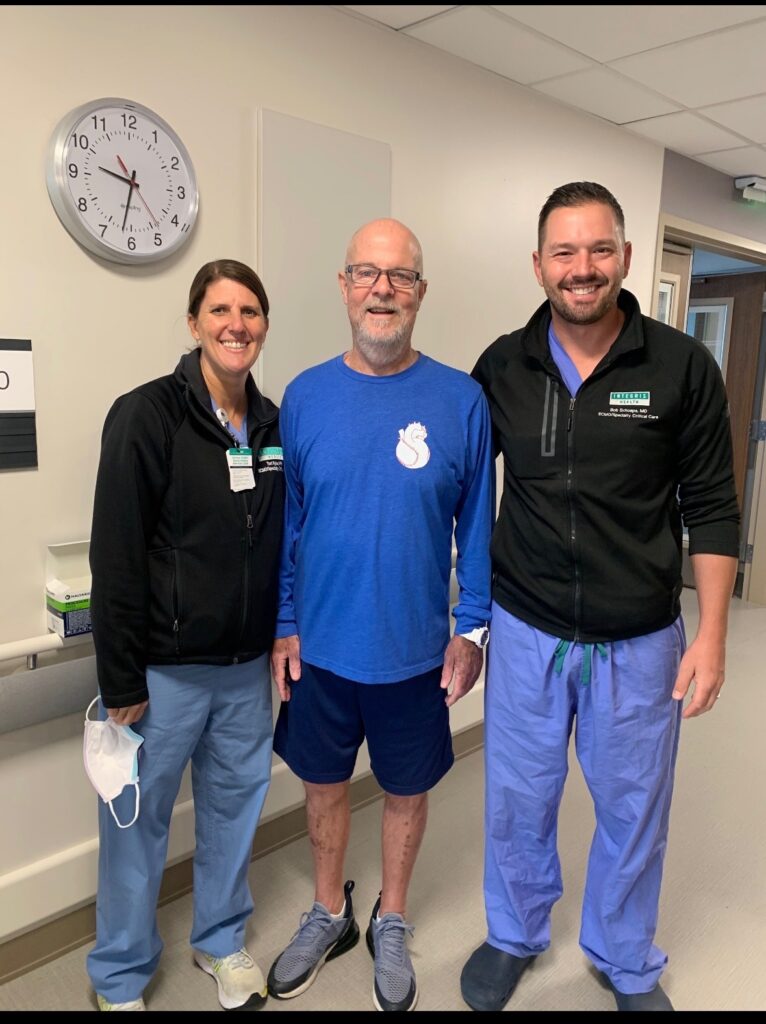
He did wake up — though not immediately. After the transplant, Petree remained sedated for more than a week. In total, he spent 87 days in the hospital, followed by months of home health care, physical and occupational therapy and outpatient rehabilitation.
“It’s beyond my comprehension,” he said. “They took my heart out, put another one in, and now I’m still here.”
The same calling that led him into ministry decades ago now carries new meaning. His story is personal, but it also larger: a donor’s decision, a family’s generosity and a system designed to turn loss into life.
“Every donor has the ability to save and heal multiple lives,” said Jeffrey Orlowski, president and CEO of LifeShare Network. “Stories like Petree’s show the real impact of that decision—one family’s generosity can give someone else more time, more moments and more life.”
Organizations like LifeShare make that connection possible, linking donors and recipients, grief and hope, endings and second chances.
Petree has spent years encouraging others to live out their faith in practical ways. Now, his experience reflects another kind of decision—one made by a donor and their family.
During Donate Life Month, that choice is often highlighted, but for Petree, its impact is ongoing.
He continues to recover, returning to the relationships and routines that have defined his life, now made possible by a transplant he once waited 55 days to receive.
Editor’s Note: Southern Baptists have addressed the need and the ethics surrounding organ donation. Albert Mohler has spoken on the topic recently, and in 1988, Southern Baptists approved a resolution on the topic.

