
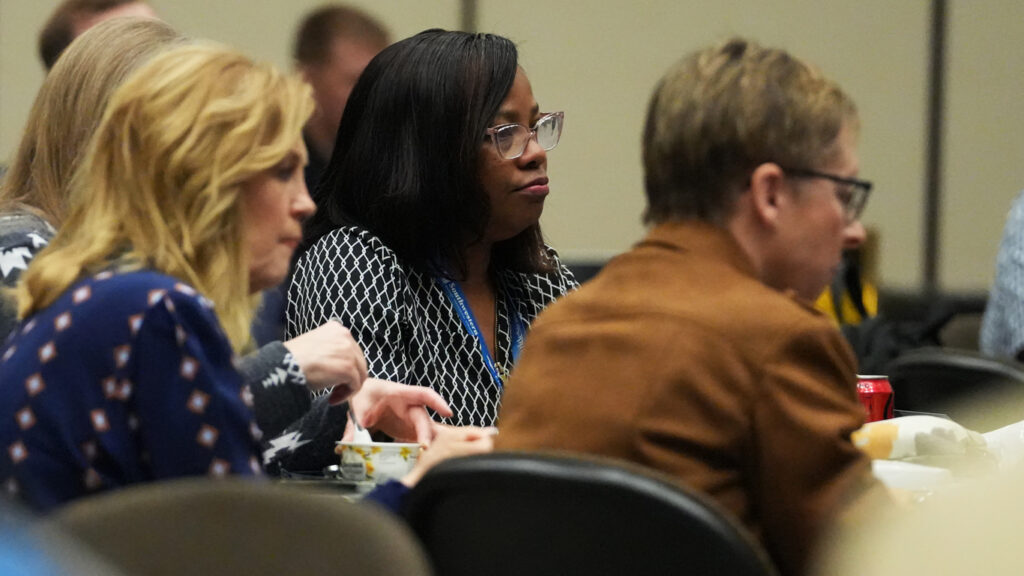
This article was originally written by Brandon Porter and published to the Baptist Press. Above: Southern Baptists of Texas Sexual Abuse Advisor Joyce McKinley listens during the sessions at the Forces for Good Summit at Southwestern Seminary Feb. 25. Photo by Brandon Porter.
FORT WORTH – A desire to eliminate sexual abuse in the local church and to be prepared to care for survivors permeated the Forces for Good Summit Feb. 24-25 at Southwestern Baptist Theological Seminary. The event, organized by the SBC Executive Committee, brought together field experts and leaders from every level of Southern Baptist life.
“We want churches to be the safest place where kids can hear the Gospel,” said Jeff Dalrymple, Executive Committee abuse and prevention director.
“And when, God forbid, abuse takes place, we want to equip churches to respond in a legal, biblical and Christ honoring way,” he said.
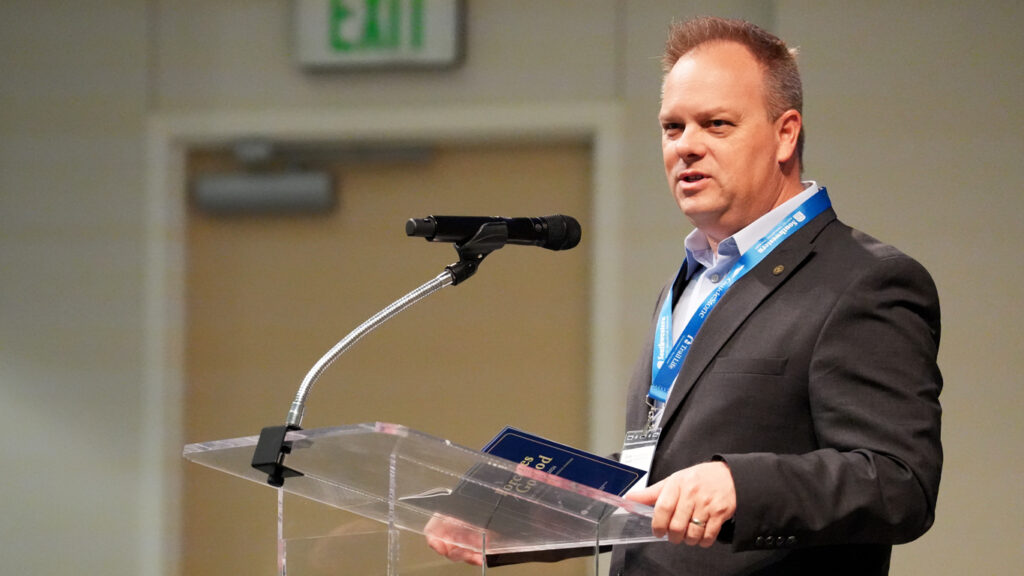
SBC Executive Committee Abuse Prevention and Response Director Jeff Dalrymple gives an overview of the Forces for Good Summit at Southwestern Seminary Feb. 25. Photo by Brandon Porter
Southern Baptists voted at the SBC Annual Meeting in June 2024 for the EC to be the home of abuse prevention and response in the SBC. Dalrymple began his work in February 2025. His hire was one of the first priorities for EC President Jeff Iorg, who assumed leadership in May 2024.
The summit was the first major event under Dalrymple’s leadership.
In addition to the conference, Dalrymple has helped to update the Essentials curriculum, first released by the SBC Abuse Reform Implementation Task Force (ARITF) in 2024 and to coordinate upcoming local training events across the country.
“This is critical for abuse prevention and response because we’re equipping convention and associational leaders to be experts where they’re at and to be able to then serve churches on the front lines,” Dalrymple said.
He considers “experts” to be leaders who can assist churches by helping guide them through prevention and response processes and point them to available resources. That may be someone inside a church or a volunteer or staff member at a local association or state convention.
“This is a full circle moment,” Mississippi pastor Brad Eubank told the group of more than 100 gathered Feb. 25 on a warm Texas morning. Eubank was a member of the ARITF and told conference participants that the group’ s first meetings were held at Southwestern.
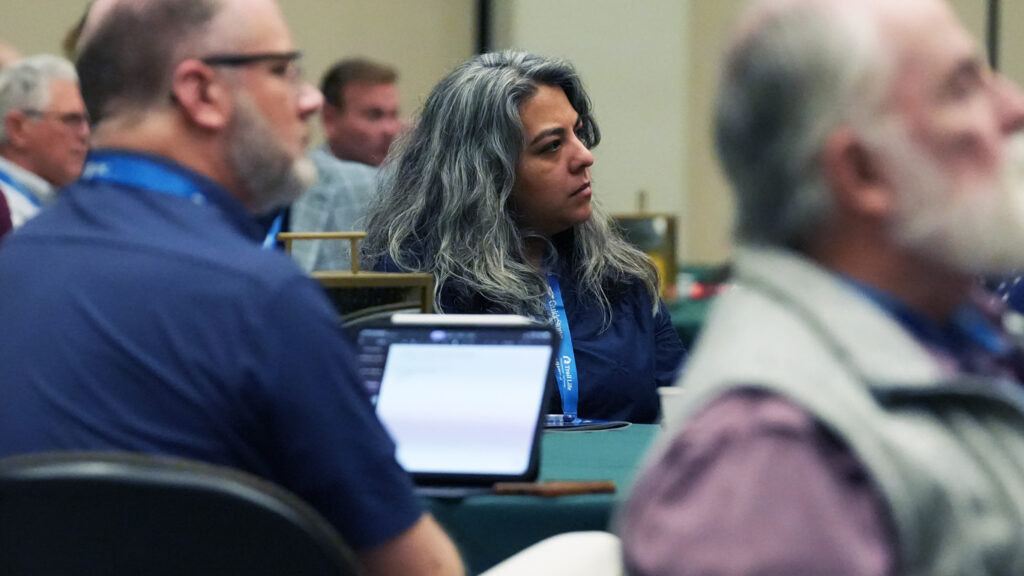
Megan Moss listens to a speaker during the Forces for Good Summit Feb. 25 at Southwestern Seminary. Photo by Brandon Porter
“I believe we are making progress but have a long way to go,” he told Baptist Press. Eubank, senior pastor at First Baptist Church Petal, Miss., and an abuse survivor, believes helping churches face this issue will require a “generational change.”
Baptist associations are close to the front lines as associational mission strategists (AMS) and directors of missions work to resource, train and encourage pastors and local churches.
A pre-summit dinner was hosted by the Southern Baptist Conference of Associational Leaders (SBCAL) and featured speaker Ken Sande, author of “Peacemaker” and the director of Relational Wisdom 360, a ministry aimed at equipping people with relational and conflict resolution skills.
“Sin needs to be dealt with openly and appropriately,” Sande told the group.
He called on church leaders to prepare to face conflict but to do so through the lens of the Gospel.
“The Gospel call us to take sin seriously but to see sin through the redeeming work of Jesus Christ,” Sande said.
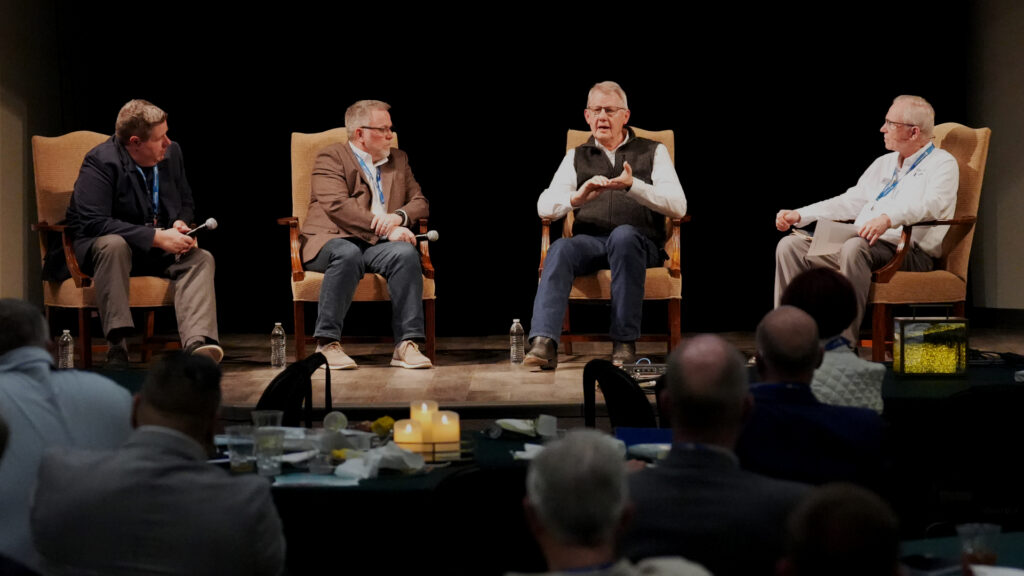
Dallas Baptist Association Associational Mission Ryan Jespersen, Louisville Regional Strategist Baptist Associational Mission Strategist Todd Robertson and Ray Gentry (far right), Southern Baptist Conference of Associational Leaders president, like to author Ken Sande talk about peacemaking at the Forces for Good Summit Feb. 24 at Southwestern Seminary. Photo by Brandon Porter
SBCAL director Ray Gentry, Dallas Baptist Association leader Ryan Jespersen and Louisville (Ky.) Regional Baptist Association AMS Todd Robertson joined Sande for a discussion during the opening session.
Robertson said helping churches create a culture of abuse prevention and response would be a powerful ministry for any local association.
“It would be incredible for us to have a team trained in this way and to be able to say to the churches on a regular basis, ‘We are here, we want to help you.’”, he said.
The group spent time brainstorming what that structure might look like in local associations as Sande sprinkled years of stories helping churches navigate through conflict, including engaging with local law enforcement when sexual abuse occurred.
“We can’t make believe situations like these aren’t happening,” Robertson said, “because they are.”
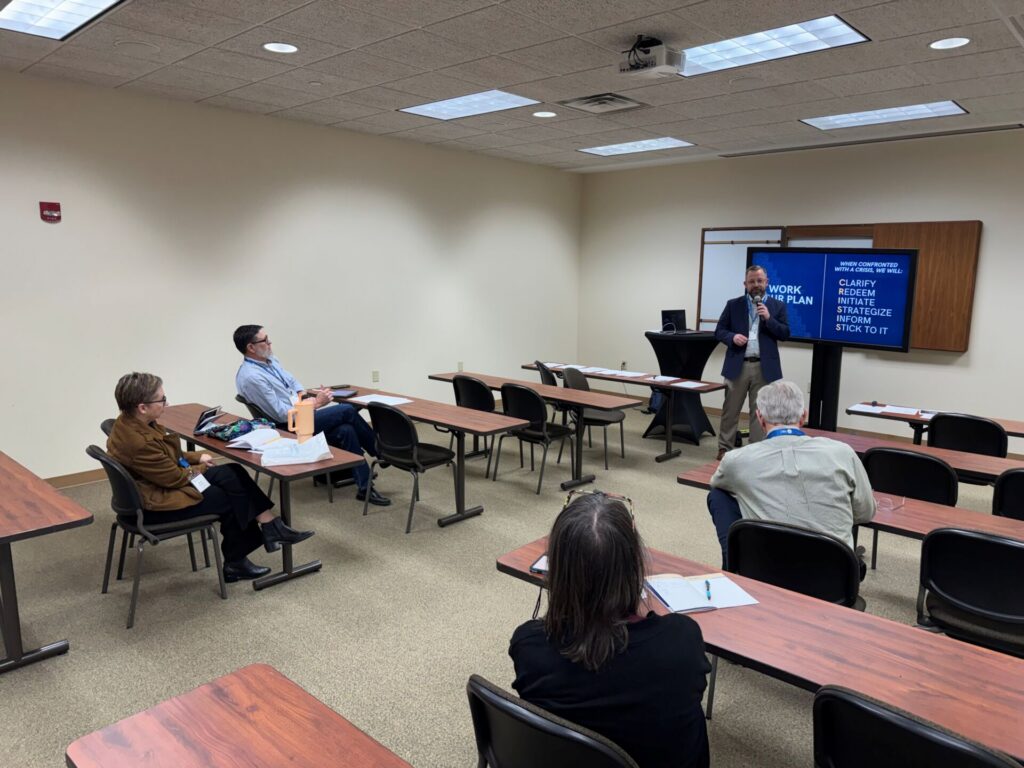
Thomas Jordan (pictured here), who serves on staff with Oklahoma Baptists, presenting at a breakout session.
Jespersen agreed and said it aligned with a primary effort he’s been pursuing in recent months which is “building intentional kingdom relationships.”
He said the relationships are focused on helping a church develop a vision and plan for internal cultural change.
One of the experts Dalrymple pointed to was Emily Smith, abuse prevention and response consultant for the Arkansas Baptist State Convention.
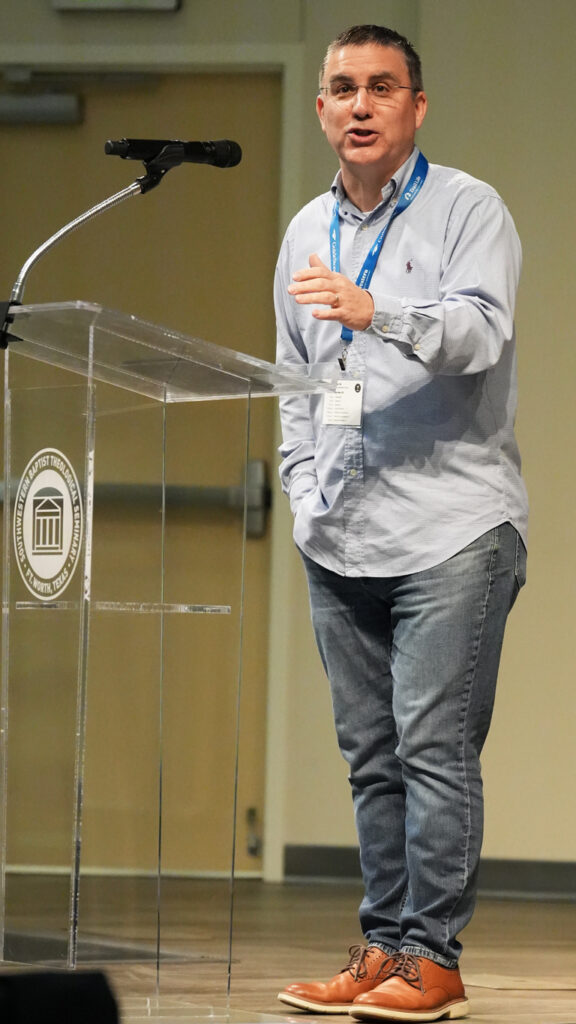
Mississippi pastor Brad Eubank encourages pastors and church leaders at the Forces for Good Summit Feb. 25 at Southwestern Seminary. Photo by Brandon Porter
Smith spent years in local church children’s ministry before moving to denominational work, first at the Southern Baptists of Texas Convention and now in Arkansas.
She says helping churches realize they can take steps to minimize the risk of sexual abuse is an area where she invests much of her time.
“If we can prevent this from happening to one child, to me that’s success,” she said.
Smith points to churches working through resources like the Essentials curriculum as a way they can develop a strategy and awareness of blind spots a potential abuser might exploit.
She helps churches ask and answer, “What can we do to help shift the culture of our church?”
The purpose of the summit, Dalrymple said, was to help churches create a “goodness culture” where they aim to prevent abuse and respond appropriately to all affected if it occurs.
A trailblazer in this area is attorney Richard Hammar. It was Hammar, according to Dalrymple, who first brought sexual abuse out of the shadows in the local church.
“He pulled that fire alarm,” Dalrymple said pointing to two articles written by Hammar in the early 1980s in the early days of his church tax and law newsletter. They garnered a huge response.
That response led Hammar to write Reducing the Risk, the book Dalrymple said launched the modern era of abuse prevention and response.
Hammar was given the Force for Good award at the summit.
In addition to Sande, the conference featured plenary sessions from Iorg, Brad Hill, president of the Gloo media network and Katie McCoy, strategy director for cultural engagement philanthropy at Vista One Group and scholar in residence at the Impact 360 Institute.
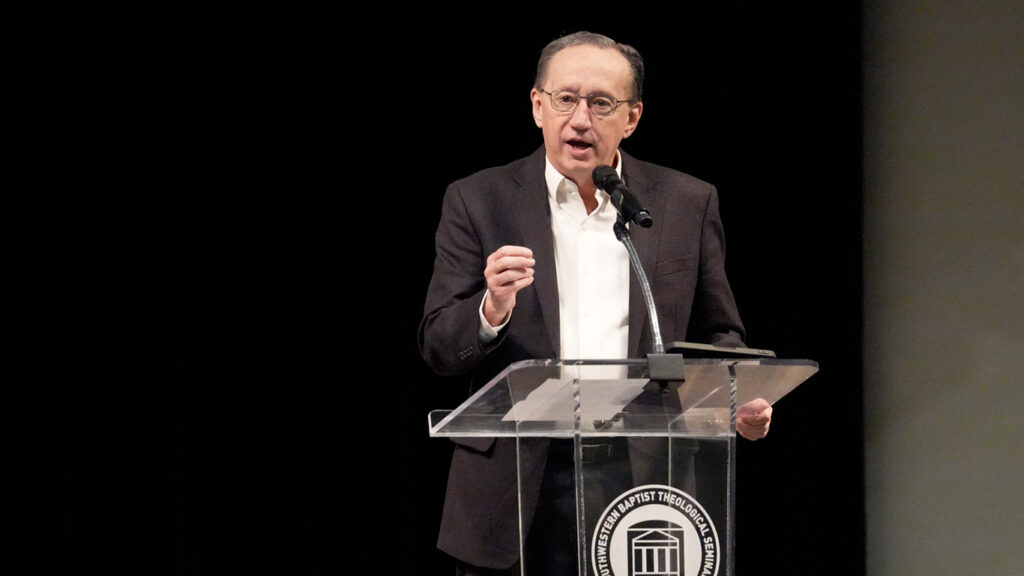
SBC Executive Committee President Jeff Iorg speaks from Galatians 6 at the Forces for Good Summit Feb. 26 at Southwestern Seminary. Photo by Brandon Porter
Breakout sessions were presented by Sally Wagenmaker, partner in the Chicago-based law firm of Wagenmaker & Oberly, addressing “Good and Godly Governance;” Eubank addressing “The Greatest Good a Church Can Do: Care Well for Survivors;” John Murphy, a seasoned leader in faith-based and service-focused nonprofit risk management, presenting “Prepared for Every Good Work: Risk Management That Strengthens Ministry;” and Robert Showers, “Ministry Enders – What you don’t know about law will hurt you!”
Thomas Jordan and Brian Hobbs presented a session on “What to Do When A Crisis Hits;” Lilly Park on “Caring for the Soul: Knowing God’s Peace;” Chuck Coker, “Multiplying Light: How Coaching and Discipling Your Team Creates a Culture of Kingdom Impact;” Mindy Caliguire, “The Soul of the Leader: How Inner Health Fuels a Culture of Goodness;” Caliguire and Jake Lapp, “The Soul of the Leader: Leader Care is Ministry Care;” and Theresa Sidebotham, “Good Fruit on the People Side: Management and Employment Law Issues.”
The sessions will be available soon at sbcabuseprevention.com.
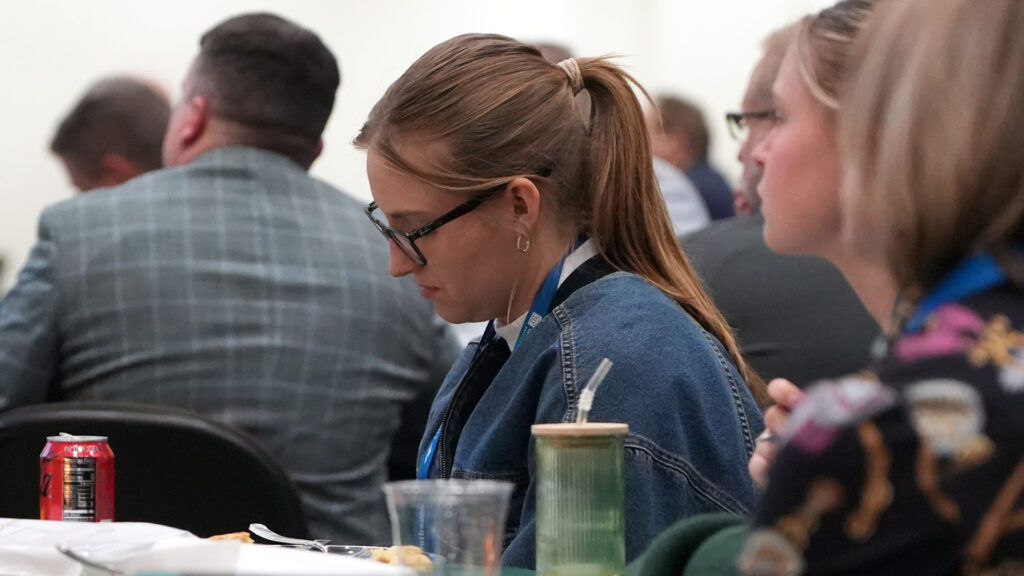
Southwestern Seminary student Rylee Riggins takes notes during a session of the Forces for Good Summit Feb. 24 at the seminary. Photo by Brandon Porter
In a short sermon based out of Galatians 6, SBC Executive President Jeff Iorg told the group, “Being a force for good means … we care for each other. The Bible says we do good when we care for each other.”
He spoke about the line churches must walk between preventative care and reactive care saying there is nothing soft about caring.
On one hand, he said, “We take sinful actions and their consequences seriously. We believe in consequences for those actions. But because we do all of this gently, we also eliminate revenge or retribution from the situation.”
Restoration is part of caring, he said, as he talked about the healing of the one who had been hurt and repentance and rebuilding of the one who has been committed the sin.
“Prevention and response mean that we restore people broken by sin while simultaneously carrying their burden with them,” he told the group.
Recalling past pastoral experiences, he recalled the “messiness of relationships” in the local church as the pastor and church members are called in Scripture to reach out to the victim and the wrongdoer.
Eubank drew from similar pastoral perspective as he spoke to the group, “Sexual abuse will always be with us until Jesus returns because we live in a fallen world.”
“Our job is to make it as hard as possible for it to happen in our church and be ready to take care of survivors if it does,” he said.

