Amy Weinstein is Senior Curator of Oral History & Vice President of Collections with the 9/11 Memorial & Museum in New York City, which houses more than 2,500 oral history and StoryCorps recordings. Recordings which document the stories of the victims, survivors, first responders and others whose lives were changed forever by the terrorist attacks on the United States on Sept. 11, 2001, and by the 1993 bombing of the World Trade Center.
StoryCorps is an American non-profit organization which aims to record, preserve, and share the stories of Americans from all backgrounds and beliefs. Its mission statement is “to help us believe in each other by illuminating the humanity and possibility in us all—one story at a time.” StoryCorps grew out of Sound Portraits Productions as a project founded in 2003 by radio producer David Isay. It is headquartered in Brooklyn, N.Y.
“Back in 2006, when I learned that it would be our goal to record a remembrance for each person killed on 9/11 and in the 1993 bombing, I had no real understanding of what it would take to accomplish that goal, even if we could get there, or how it would affect me and how I looked at the world,” Weinstein said.
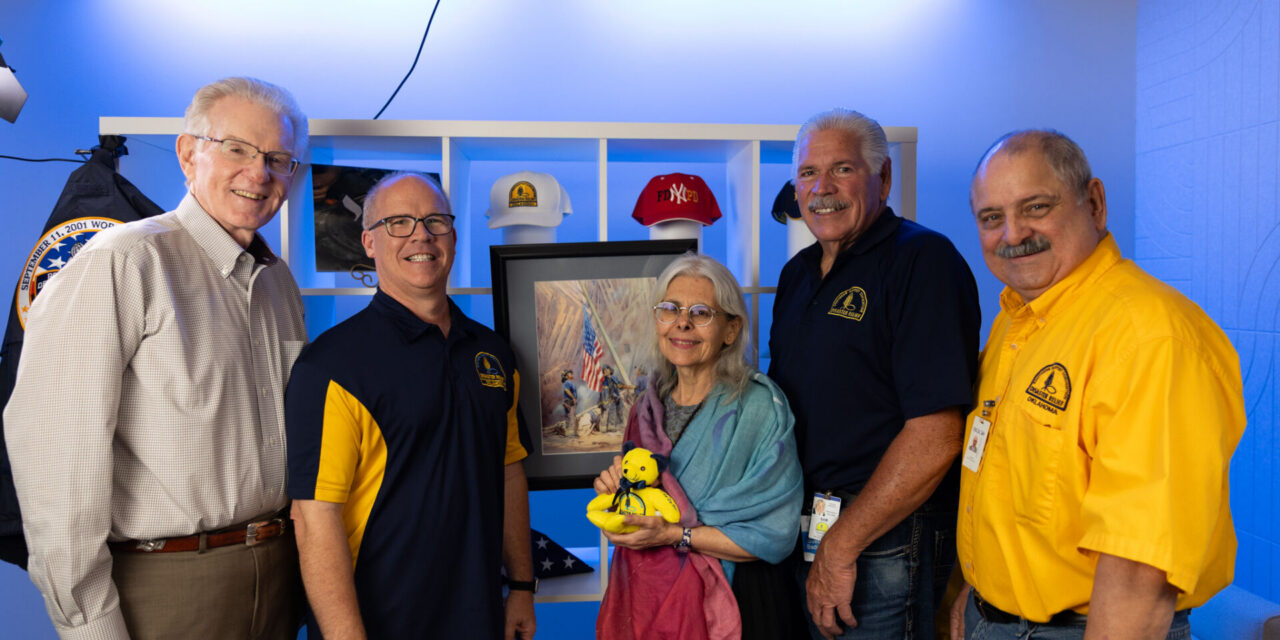
Now as the 25th anniversary of 9/11 approaches, Weinstein traveled to Oklahoma City to meet and interview several men who played a crucial role in the response to the 9/11 attacks. Gathering at the Baptist General Convention of Oklahoma (BGCO) headquarters at the WatersEdge Building in Bricktown July 27-28 were Sam Porter, Bob Nigh, Paul Bettis and Dean Kiser—all of whom were among the hundreds of Oklahoma Baptist Disaster Relief volunteers who ministered to the citizens of the Big Apple in the months following the attacks.
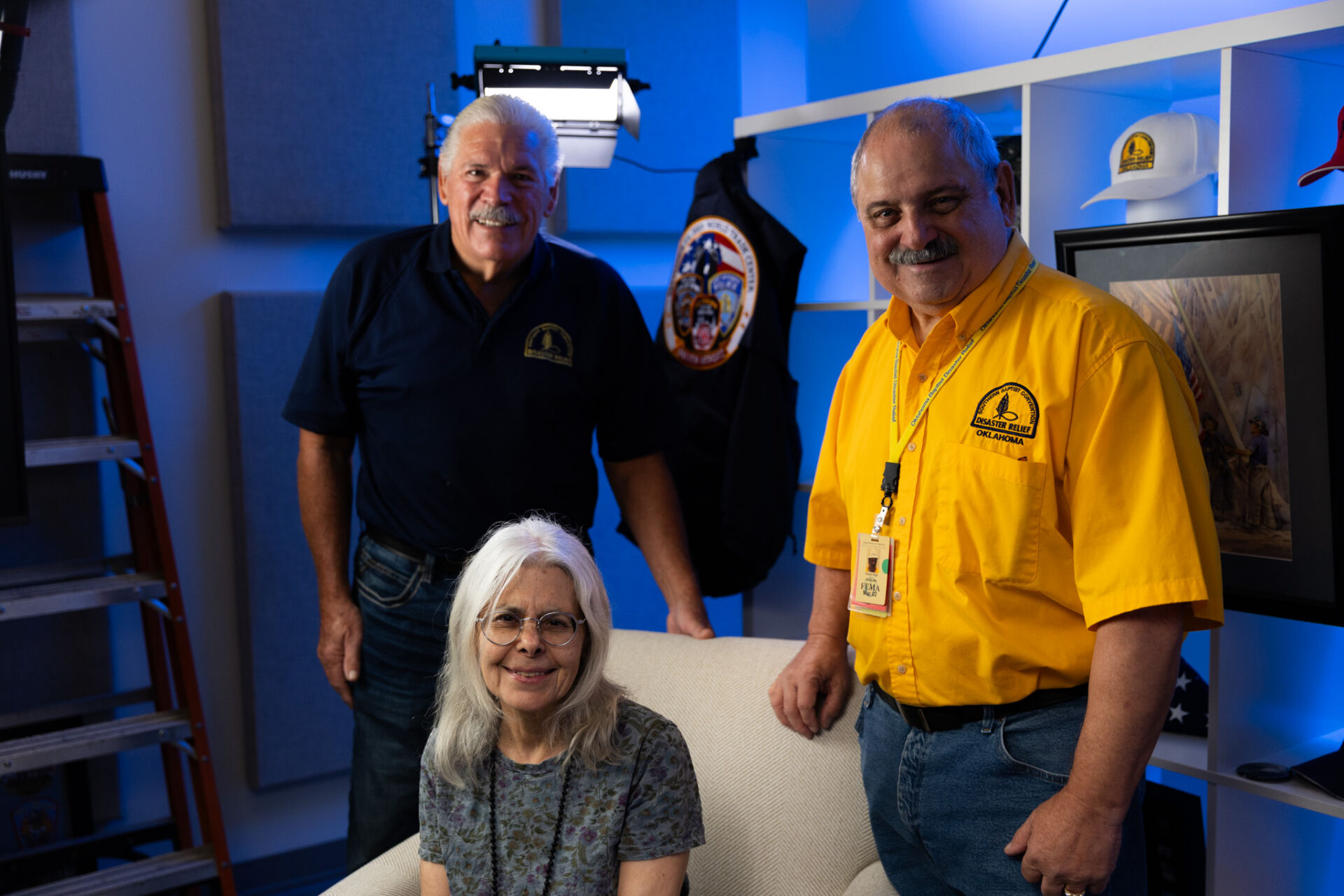
Also participating in the recordings were Anthony Jordan, BGCO executive director-treasurer at the time of the attacks, who provided perspective of the Convention’s support of the response by Oklahoma Baptists in 2001, and current Oklahoma Baptists disaster relief director Jason Yarbrough, who shared with Weinstein the ins and outs of Southern Baptist Convention disaster relief in general and in Oklahoma specifically.
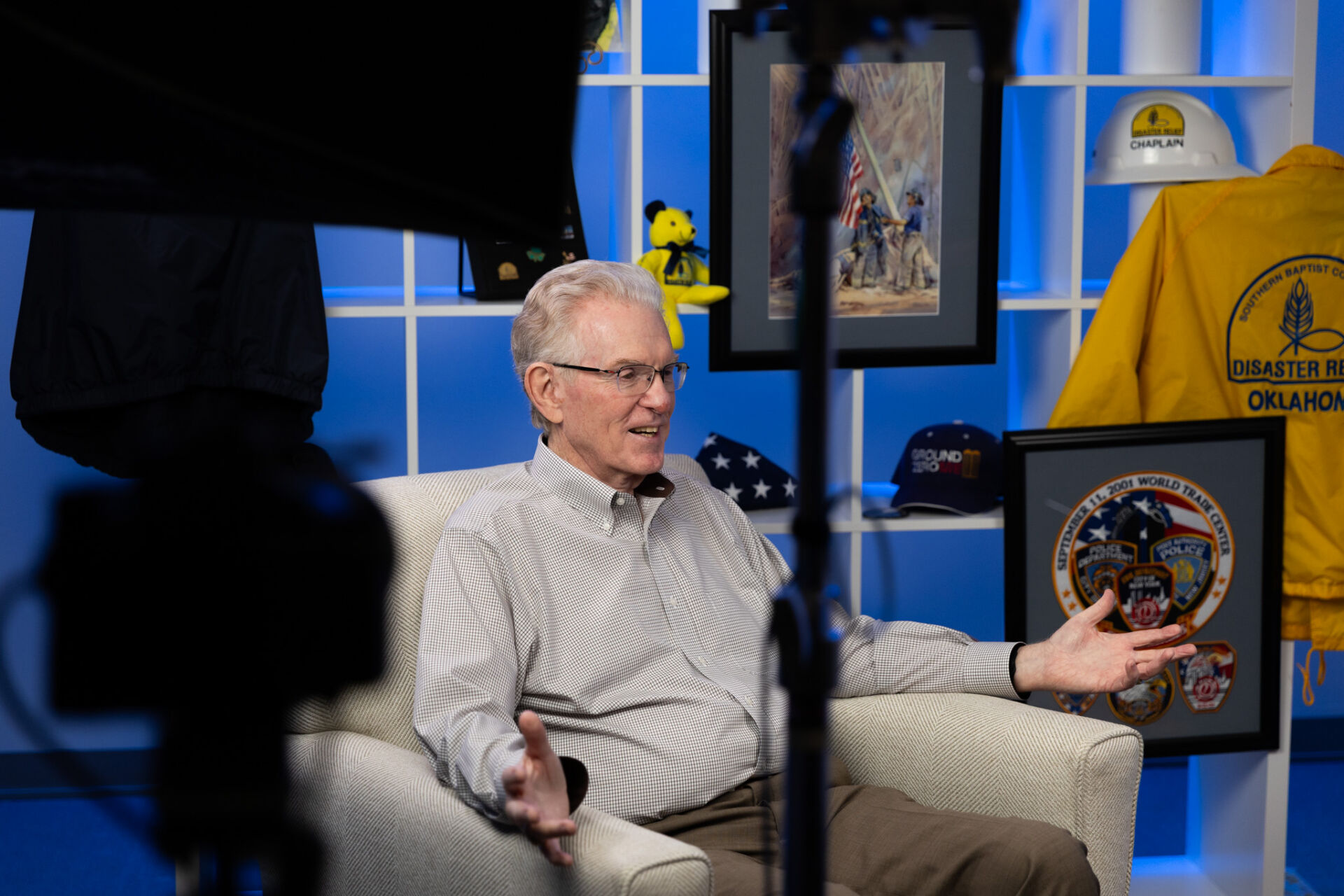
Recording of the interviews/videos, which averaged 90 minutes each, were captured in the Convention’s audio/visual studio in the WatersEdge Building by Oklahoma Baptists’ multimedia designer Amelia Staggs.
Weinstein’s trip to Oklahoma City was partially funded by a gift from the Eli Lily Foundation.
“The gift was designed to help us look at faith-based objects and faith-based themes and materials to be included in the museum’s collection,” Weinstein explained. “They have supported other museums such as the World War II Museum in New Orleans and the Lower East Side Tenement Museum in New York.”
The purpose of Weinstein’s recordings of Oklahoma Baptists is to include them in an exhibition about pastoral care at what became known as “Ground Zero” following the terrorist attacks. The date of the opening of that exhibit is yet to be determined,
The 9/11 Museum also features a display case that features items from agencies and individuals who responded and ministered at the site—agencies whose volunteers made a distinct impact during the aftermath of the attacks—but whose efforts have not yet been acknowledged.
To help fill such a display featuring the BGCO response, Porter and Nigh have donated personal items such as the white, plastic hard hat Nigh wore as he, Porter and Bettis ministered as chaplains in the temporary morgue in Ground Zero, their credentials, iconic SBC yellow shirts, hats and windbreakers and other items such as photographs, commemorative pins and New York police and fire department patches.
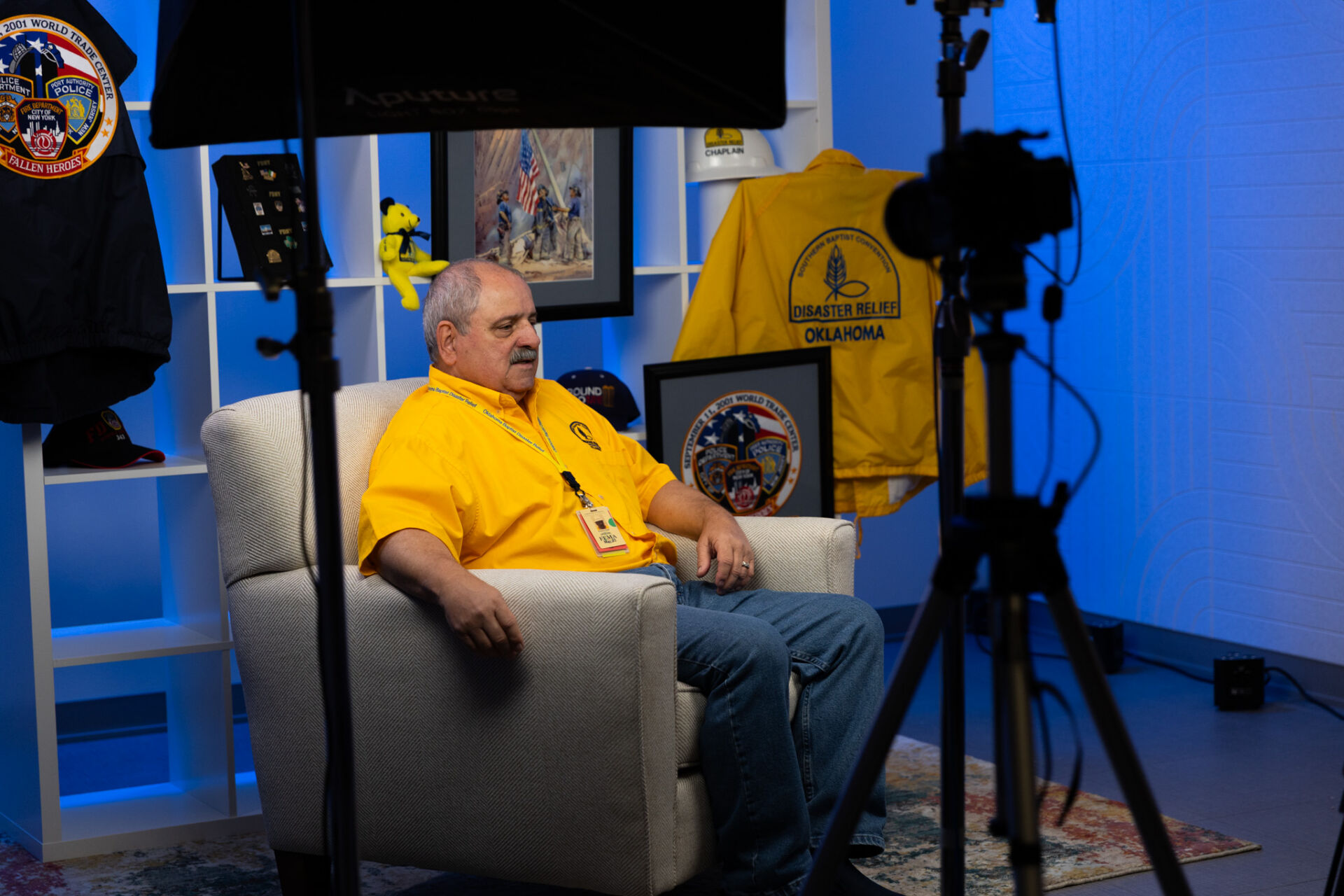
“We also will take photographs of the items you gave us and put them on the collections portal our website,” Weinstein said. “That will include descriptive verbiage about the items and Southern Baptist disaster relief.”
“There are several possibilities,” Weinstein said. “For example, we have a section of the museum where there is a wall with different hard hats displayed, and we rotate those in and out. My supervisor has been a champion of making sure we get your story documented in the museum and she is very eager to make sure you are represented in our permanent collection. She and I formed a relationship with one of the families from Battery Park who developed a friendship with the Southern Baptists—amazing people who cleaned their apartment after the attacks,” Weinstein said.
Porter, Nigh, Yarbrough and Alan Quigley, Oklahoma Baptists’ associate executive director, plan to attend several events being held in conjunction with the 25th anniversary.
Those include 9/11 Memorial & Museum Community Day on Thurs., Sept. 10, when the 9/11 Memorial Museum will be open exclusively for Feb. 26,1993 and Sept. 11, 2001 survivors and family members, family members of individuals who are sick or who have died from 9/11-related illnesses and injuries, 9/11 rescue and recovery workers, first responders, active-duty military and veterans, and a special concert at 3:30 p.m. on Fri., Sept. 11 presented by The New York Philharmonic, which will be joined by the U.S. Army Field Band Soldiers’ Chorus in commemorating the 25th anniversary of the attacks.
Every year, the Sept. 11, 2001 commemoration ceremony has observed six moments of silence, acknowledging the exact times when each of the World Trade Center towers was struck and fell, the Pentagon was attacked, and Flight 93 crashed in Shanksville, Pa. This year’s ceremony, and future ceremonies, will include a seventh moment of silence to honor those who lost their lives to 9/11-related illness and injury in the years since the attacks.
The Oklahoma Baptist contingent also been invited to participate in the seventh moment of silence on the Memorial grounds immediately following the reading of the names on the 25th anniversary of 9/11.
Jordan, Porter and Yarbrough hope the story of Oklahoma Baptists’ response to the 9/11 attacks brings glory to God and provides perspective on how He works through dedicated servants to minister to people during tragic circumstances.
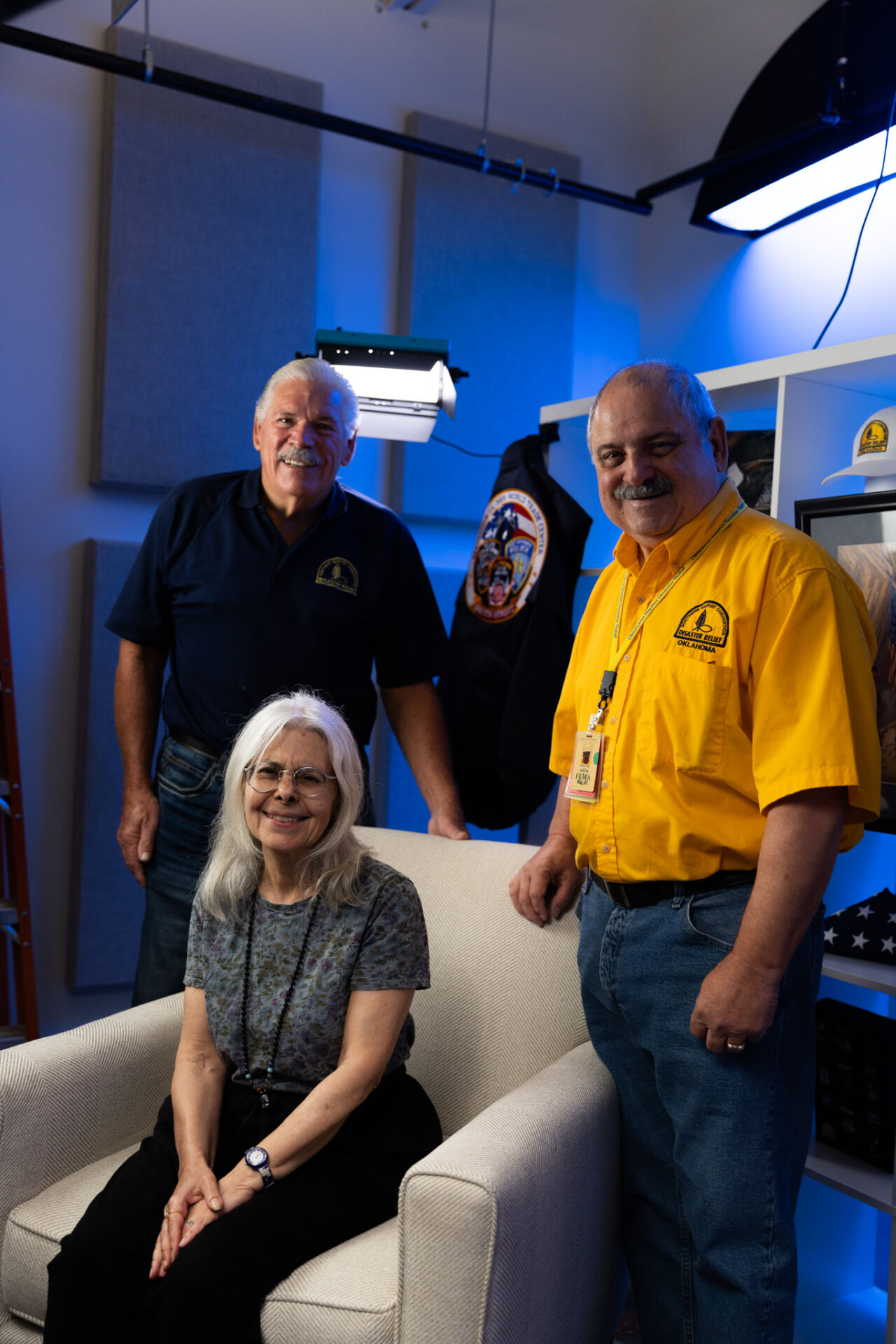
“We are very encouraged to know that the Curator of the 9-11 museum in NYC was curious to know who asked us to go in response to the 9-11 terrorist attack, and how were we able to fly so quickly when all flights and normal air space was closed for many hours/days,” Porter commented. “We are thankful that the unusual story of what we believe is confirmation that the Lord intervened by his Holy Spirit to open doors across the U.S. following the Attack. This will be preserved ‘until Jesus comes’ to tell this important part of Oklahoma Baptist disaster response history.”
“Oklahoma SBDR has such a rich history of serving during the difficult times, so being recognized as a key, important part of the 9/11 response will help preserve the story and the mission of our volunteers to bring help, hope, and healing in times of disaster,” Yarbrough said.
“Potentially having some of our Oklahoma DR apparel and other pieces on display in the museum will allow folks to realize how invested we were in the recovery efforts. Who would have ever thought this preacher boy from Skiatook, pastoring in Atoka when 9/11 happened, would now be leading the ministry that made and continues to make such an impact during disasters. As I reflect over the past 25 years, I am grateful for the faithfulness of God and His presence in the calm seasons as well as the storms of life.”
“Amy’s visit on behalf of the museum underscores the tremendous impact of the work of Oklahoma Baptists during the tragic days following 9/11,” Jordan added. “The world will have the opportunity to hear first-hand accounts of the caring and servant hearts of Oklahoma Baptist Disaster Relief chaplains and the generosity of Oklahoma Baptists. Most of all, during our interviews we were able to share the Gospel of Christ for all to hear for years to come.
“The Murrah bombing was the second-greatest terrorist attack in U.S. history, second only to the terrorist attacks against America on Sept. 11, 2001. For this reason, we, as Oklahomans, felt the impact of this evil on a level few others could. I remember walking over the crater left from the explosion of the truck parked in front of the Murrah building, trying to minister to first responders and the families forever touched by the bombing. Our team experienced the same. When 9/11 happened our Oklahoma team had a unique perspective. We also walked down that path. We knew the exhaustion, pain, and loss that such a tragedy brings. I think that is why our involvement meant so much to the New Yorkers. They knew we understood their heartache. And we could offer comfort and hope because of faith in the resurrected Lord.”